YNAB review: a superb method that expects your attention
Eight weeks with assigned dollars, targets, imports, overspending, and the awkward first month.
YNAB is our runner-up budgeting app for 2026 at 4.5/5. Its give-every-dollar-a-job method is the best planning system we tested, especially for irregular expenses. Rocket Money ranks higher overall because it costs less to start, surfaces recurring charges faster, and asks less of users who mainly need awareness.
Best for active budgeters. YNAB makes tradeoffs concrete and future expenses manageable, provided you are willing to maintain the plan.
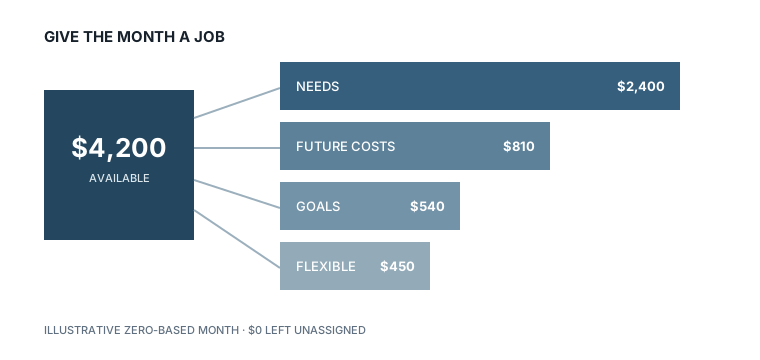
We tested YNAB for eight weeks with checking, savings, and credit-card accounts, plus a manual cash account. The test covered two pay cycles, a quarterly insurance premium, credit-card statement payments, category overspending, a refund, and a mid-month target change. Imported transactions were reliable overall, though one institution required reconnecting twice.
YNAB is not primarily an expense tracker. It is a decision system built around money already available. You assign those dollars to rent, groceries, future car repairs, or any other category, then adjust the plan when reality differs. Forecasting next month’s hoped-for income is deliberately discouraged. That constraint can feel strange, but it prevents a projected paycheck from financing today’s choices.
What worked
- Excellent zero-based planning method
- Targets turn irregular bills into monthly amounts
- Overspending tradeoffs stay visible
- Strong guides and live education
- One subscription supports household sharing
What did not
- $109 annual price is substantial
- First month has a genuine learning curve
- Requires frequent approval and adjustment
- Reporting is stronger on web than mobile
- Less focused on subscription discovery
How YNAB scored
The weighted score reveals the tradeoff. YNAB earned the highest budgeting score in our field, but lower value and usability marks pulled its total to 90.0/100, or 4.5/5. This is not a penalty for being sophisticated; it reflects the time and money a household must invest to realize that sophistication.
| Category | Weight | Score | Points earned |
|---|---|---|---|
| Daily tracking | 30% | 9.0/10 | 27.0 |
| Budgeting & goals | 25% | 9.9/10 | 24.75 |
| Value | 20% | 7.8/10 | 15.6 |
| Usability | 15% | 8.7/10 | 13.05 |
| Trust & support | 10% | 9.6/10 | 9.6 |
| Total | 100% | — | 90.0/100 |
The method is more important than the interface
Four ideas underpin YNAB: give every dollar a job, prepare for non-monthly expenses, change the plan when needed, and gradually spend older money. The practical breakthrough is the second idea. A $600 annual premium stops being a surprise when the budget asks for $50 each month. The account balance may not change, but the available amount for other categories does.
Covering overspending is equally valuable. If groceries run $40 high, YNAB asks which funded category will surrender $40. The software does not scold; it forces arithmetic. That simple transfer reflects the real constraint that a conventional spending chart can hide. Over time, the plan becomes less about prediction and more about choosing.
Pricing is clear, but not cheap
As of August 5, 2026, YNAB’s official pricing page lists $14.99 monthly or $109 annually before tax. The annual plan works out to about $9.08 per month and includes a 34-day trial for direct signups. Eligible college students can apply for one complimentary year. App-store purchase terms may differ.
The relevant value question is not whether YNAB can save $109. Almost any consistent budget can expose that much leakage. The question is whether this specific workflow will remain in use. Someone who approves imports and adjusts categories three times a week may get excellent value. Someone who wants a Sunday spending summary may pay for an obligation they avoid.
The first month is the hardest
New users often confuse account balances with category availability. Savings dollars still need jobs; credit-card purchases move funded money into a payment category; and targets describe a desired contribution or balance rather than new income. These concepts click, but usually after a real transaction creates a reason to understand them.
We recommend starting with no more than 15 categories, adding known annual bills, and scheduling three ten-minute reviews per week. Do not rebuild a perfect year on day one. Our selection guide explains why one full pay cycle is the minimum fair trial. YNAB’s 34 days are enough if the test includes a bill cycle and a credit-card payment. The 1% savings-rate math shows how a small target change compounds.
Imports help; they do not automate the method
Bank import reduces typing, but YNAB still expects users to approve and categorize transactions. Manual entry can coexist with imports because matching avoids duplicates. That loop is more intentional than Rocket Money’s largely observational approach.
For couples, YNAB Together can share budgets while preserving separate logins. The method works best when both people agree on category priorities and a review rhythm. Software cannot settle a disagreement about travel versus debt payoff, but it can display the exact dollars at stake.
Who should choose YNAB
Choose YNAB if you want a hands-on plan, have irregular but predictable expenses, or routinely wonder why a healthy account balance is not truly spendable. It is also strong for households ready to discuss tradeoffs in one shared budget.
Choose Rocket Money if you first need automatic visibility, subscription detection, and a lower-friction routine. Our Rocket Money versus YNAB comparison shows each category, while the full 2026 ranking includes less expensive alternatives.
YNAB is not difficult because the interface is poor. It is difficult because deciding what money should do requires attention—and YNAB refuses to disguise that work.
Frequently asked questions
How much does YNAB cost in 2026?
As checked August 5, 2026, YNAB lists $14.99 per month or $109 per year, before applicable taxes, with a 34-day trial for direct signups. Students can request a free year with proof of enrollment. Verify current terms on YNAB’s official pricing page because app-store billing and promotions may differ.
Does YNAB connect to bank accounts?
Yes. YNAB supports direct import for many banks in the United States, Canada, the United Kingdom, and parts of Europe, while file-based and manual entry remain available. Connection quality varies by institution. Test every important account during the 34-day trial, including pending transactions and any multi-factor authentication refreshes.
Is YNAB worth it for beginners?
YNAB is worth learning when a beginner wants an active budgeting practice and can review the plan several times a week. It is a poor fit when the goal is passive expense monitoring. The tutorials are strong, but users must still assign money, approve imports, and cover overspending rather than simply observe charts.
Why does SaveHaven rank Rocket Money above YNAB?
YNAB wins our budgeting-method category, but Rocket Money is faster to set up, stronger at recurring-charge discovery, and useful on a free tier. Our weighted benchmark favors the tool most people can sustain, not the strictest method. Rocket Money scored 4.8/5 overall; YNAB scored a still-excellent 4.5/5.